Earlier this week Microsoft unveiled a preview of the engine behind its next-generation Web browser, Internet Explorer (IE) 9. Microsoft is still diligently working to convince many customers to make the switch from the archaic IE6 to the current IE8, but the march of development never stops so Microsoft is already hard at work on the next version as well.
Justin Saint Clair, Internet Explorer program manager at Microsoft, wrote in a post on the IEBlog “The Internet Explorer Platform Preview is a light-weight frame around the core IE platform which includes the rendering and layout, object model, parsing, and script engines. It’s a way to try out the platform, and the experience improvements we’re making to performance, standards support and interoperability, enabling “the same markup” to work.”
Saint Clair clarified “We will update [the Platform Preview] approximately every 8 weeks on the road to Beta. Each update will provide a more complete look at the IE9 platform. The Platform Preview along with these updates and the reporting tools are designed to speed up the feedback loop between developers and the IE platform.”
Read more: pcworld.com

Well, that’s a bit embarassing: Google has had its trademark application for ‘Nexus’ rejected, as a small Oregon firm already owns it.
The threat to the name of the company’s flagship smartphone is rather more serious than the last. In January, the estate of the author Philip K Dick challenged the Nexus name on the grounds that it was used for the androids in Dick’s most famous book, Do Androids Dream of Electric Sheep, later filmed as Bladerunner.
Google launched the Nexus brand in January. But Integra Telecom apparently registered the name as far back as 2008, using it for a telecoms service, and says it’s making $60 million a year out of it.
Read more: tgdaily.com

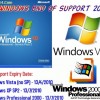
Microsoft made a slew of virtualization announcements today, affecting both current and future products. Arguably the most important tidbit is that the company has removed the virtualization layer’s hardware requirements for the XP Mode available in Windows 7. Those already running XP Mode don’t need to bother updating since they already have it working, but users who were unsure of their PC hardware can grab the update and try out XP Mode on Windows 7 Professional, Windows 7 Enterprise, or Windows 7 Ultimate. The update is available for Windows 7 32-bit (3.7MB) and Windows 7 64-bit (4.1MB).
Microsoft has been criticized for complicating things by having XP Mode only work on processors that supported either Intel’s VT or AMD’s AMD-V. This requirement was troublesome and confusing, as many Intel owners weren’t sure if their CPU supported hardware virtualization, and if it did, whether it was turned on in the BIOS. Now that problem has been eliminated, removing a barrier to the adoption of Windows 7 among small and mid-size businesses that still cling to Windows XP.
Read more: arstechnica.com

SAN FRANCISCO (Reuters) — Google is working with Intel and Sony to develop a new class of internet-enabled televisions and set-top boxes, according to the New York Times.
The effort, known as Google TV, has been under way for several months and is based on Google’s Android software which is currently available in certain smartphones, the Times, citing people with knowledge of the project, reported on Wednesday.
Logitech International is also involved and is developing peripheral devices, such as a tiny keyboard.
“The partners envision technology that will make it as easy for TV users to navigate Web applications, like the Twitter social network and the Picasa photo site, as it is to change the channel,” the Times reports.
Google has begun testing the set top box technology with Dish Network, the Times said.
Representatives from Google, Intel and Sony were not immediately available for comment. A Logitech spokeswoman said the company did not have any comment.
Read more: new window

If you can’t tell your Belt of Orion from your Little Dipper, Microsoft is here to help. Today it added its WorldWide Telescope application to Bing Maps. The application let’s you look up at the sky from a street view level in a map and see the stars and planets conveniently identified by red lines connecting them together.
Microsoft debuted its WorldWide Telescope application two years ago, and it’s existed as a standalone desktop and Silverlight app. But now that it is part of Bing Maps, it should become more popular. (Inside Bing Maps, you first need to click on “Map Apps” and select WorldWide Telescope to enable it).
Read more: techcrunch.com

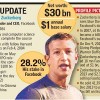
NEW YORK (CNNMoney.com) — Facebook topped Google to become the most visited U.S. Web site last week, indicating a shift in how Americans are searching for content.
Web analysis firm Experian Hitwise said Monday that the social networking site surpassed Google to take the No. 1 spot for the week ended March 13.
“It shows content sharing has become a huge driving force online,” said Matt Tatham, director of media relations at Hitwise. “People want information from friends they trust, versus the the anonymity of a search engine.”
Facebook accounted for 7.07% of U.S. Web traffic that week, while Google (GOOG, Fortune 500) received 7.03%. The study compared only the domains Facebook.com and Google.com — not, for example, Google-owned sites like Gmail.com.
Read more: CNNMoney.com

Google’s Nexus One smartphone is the flagship of the Android fleet. Sold by Google itself via its online store, the phone was unveiled in January for use on the T-Mobile network, with future versions planned for other carriers. On Tuesday, the first of those took its bow as Google announced a Nexus One compatible with AT&T’s 3G network.
Unlike the T-Mobile version of the Nexus One, the AT&T-compatible model isn’t available at a subsidy from the carrier. Customers have to buy the unlocked AT&T-compatible version of the phone, which costs $529. By contrast, those who wish to use the phone on T-Mobile have the option of buying a T-Mobile-compatible unlocked phone for $529 or signing a new two-year commitment with T-Mobile and getting the phone for a discounted price of $179.
Read more: macworld.com

While the browser didn’t seem particularly zippy, it offers plenty of features that make it an appealing alternative to Safari.
Here at South by Southwest Interactive, I finally got a little hands-on time with Opera Mini for the iPhone, which Opera started showing off last month at the Mobile World Congress Show in Barcelona. The Norwegian browser company told me that it’s still putting the finishing touches on it and plans to submit it to the iPhone App Store real soon now.
On every platform it runs on, Opera Mini’s signature feature is that it’s speedy, thanks to server-side compression that crunches Web pages down before they get sent to the browser. In my extremely informal experiments here at SXSW, Mini didn’t feel particularly zippy. (Actually, it loaded the New York Times’ home page more slowly than Mobile Safari did.) But it may not have been a real-world test of how it’ll perform when Apple approves it (please!) and it shows up on the App Store: An Opera representative told me that the compression is still going on via servers in far-away Norway, which would tend to bog things down.
Read more: pcworld.com

Microsoft today released the Windows Internet Explorer Platform Preview to the public. The release is meant to demonstrate the capabilities of Internet Explorer 9 to Web developers while at the same time providing feedback to the IE9 team. Microsoft says it is committed to updating the Platform Preview to keep a more effective rhythm for discussion, and it will be updated every eight weeks or so. Microsoft will share feedback with standards-setting bodies in addition to using it for internal development.
The Platform Preview is a minimal wrapper: it’s not a full-fledged browser. It has no tabs. It has no address bar. It has no back button. So what is included? Everything that Web developers need to see: the rendering engine, of course, as well as the new JavaScript engine, hardware acceleration features, and the developer tools. The IE9 team told Ars that each update will use one of the latest internal engineering builds, at which point the feedback loop will start again.
Read more: arstechnica.com

Although still engaged in talks with the Chinese government over the issue of censorship of its Chinese-language search engine, signs are increasing that Google could soon close the search engine. According to Financial Times, with talks at an impasse, Google is 99.9 percent certain it will close down Google.cn. The company has gone so far to draw up detailed plans of its possible closure.
It is a stance that is hardening on both sides. China’s government has been warning Google’s partners to prepare for the eventuality of business without Google. Business partners that offer a Google-powered search box on their site would either have to direct searches to Google’s main site, a rival search engine, or filter the results themselves to comply with government regulation, says CNET News.
Read more: itbusinessedge.com

Ex-Sun man Tim Bray has joined Google and started as he means to go on, with a blistering attack on the iPhone.
Bray, the co-inventor of XML, was one of a number of Sun execs to jump ship after the company was taken over by Oracle.
“I’d had an offer to stay with Oracle which I decided to decline; I’ll maybe tell the story when I can think about it without getting that weird spiking-blood-pressure sensation in my eyeballs,” he says on his blog.
Read more: tgdaily.com

The iPad officially became available for pre-order earlier today and while plenty of you are still debating about whether or not to pre-order, it appears as if the device might already sold 51,000 units in just two hours via pre-order. Wow.
If you’ve ever doubted how dedicated Apple fans are, the background on how these figures were determined will assuage any doubts. A group of particularly prudent Apple fans from the APPL Sanity Board at Investor Village decided to put together a spreadsheet of order numbers, times that orders were placed and contents of those order. As someone who has been known to obsess over Apple details myself (tracking a freightliner from China to the US with 27″ iMacs on-board in order to better guestimate delivery time), my hat is off to these folks!
Using this information, they were able to come up with a baseline for the number of items being sold through the Apple Online Store.
Read more: mashable.com

Google to stop censoring web results in China?
Google may cease its censorship of search results on the web in China over the next few weeks, according to slips from unnamed sources. While contacts for the WSJ claim the search engine giant may try to avoid leaving the Chinese market altogether, they say it would make several individual agreements with numerous Chinese agencies to operate parts of its business while letting it abandon the search site if the government refuses to allow uncensored material. Government officials have insisted that allowing Chinese residents to see the full Internet would break its laws.
Read more: electronista.com

“And it’s about damn time!”
Sorry, that was just my excited utterance upon reading Thursday morning’s AppleInsider story about iPhone OS 4.0. It cites “people with a proven track record” in claiming that multitasking will finally make its debut.
Multitasking, of course, refers to the operating system’s ability to run more than one app at a time and let you switch between them at will, just like you can do in Windows, Mac OS, Android, Palm WebOS, and just about every other OS on the planet–mobile or otherwise.
The iPhone OS currently offers limited multitasking: You can listen to music while, say, reading a book, and keep a phone call active while browsing in Safari, but that’s about it.
Read more: cnet.com

The formidable triumvirate of Amazon, Dell, and Google is apparently poised to give iTunes the first serious run for its money just as the iPad is about to take Apple’s downloadable media megastore where no computer has gone before.
Engadget has posted two slides that appear to come from a Dell presentation showing that the Google Android-powered Dell Streak tablet will include access to over 300,000 e-books in the Kindle store, everything in the Amazon MP3 download store (over 11 million “songs and extras”), and over 50,000 movies and television shows available for one-day rental or permanent purchase.
Taken together, this mirrors what iTunes offers for Apple devices, giving hardware manufacturers such as Dell a way to kick-start plans to take on the iPad.
Read more: wired.com

OnLive is a gaming service which promises to deliver high quality, graphics-intensive PC games straight to your crappy netbook, allowing them to run smoothly and at high resolution. The way it’s been demonstrated to me is that you’re basically networked into a powerful server cluster which handles all the intensive hardware grinding, and then it spits the data back at you in what amounts to a movie file, based on your actions. It’s a little complicated, but the short story is: Your crappy PC will run “Crysis” without a problem. In theory.
Every time I’ve seen OnLive demonstrated, it’s been in a managed conference hall. Until I’m actually able to try it out on my painfully lacking work PC, I’m not fully convinced.
Read more: multiplayerblog.mtv.com

Spam and phishing have been ongoing problems at Twitter for some time, and tonight the company announced that it is stepping up its efforts to stop them with some new features, described as being able to “detect, intercept, and prevent the spread of bad links.”
In a blog post, Twitter (Twitter) writes that the protection works by “routing all links submitted to Twitter through this new service … even if a bad link is already sent out in an email notification and somebody clicks on it, we’ll be able keep that user safe.”
Read more: mashable.com

Online sources claim that Microsoft has decided to launch Windows 7 Service Pack 1 before the end of the current year. This would be earlier than originally anticipated.
The company has officially never stated the expected launch period for this patch release. However it was expected to arrive only after 22 months from the release date.
Read more: techwhack.com

Google is slowly taking over your life, so much so that now I refer to everything as ‘Google’. I Google in the morning, get a quick Google done before lunch and always make sure I have at least one Google before bed. Sounds terrible, I know.
But now the search giant wants to cross over from your computer and phone to your TV with a programming search service it’s been testing.
According to the Wall Street Journal, Google has been testing its “television programming search service” for the past twelve months.
Read more: computerweekly.com

Apple rolls out the first TV advert for the iPad, displays the device being used on several people’s laps
Apple used the high-profile Oscars ceremony to release its latest advertising campaign. No surprises for guessing which product was shown: the iPad.
The new ad shows several people’s laps from a first-person perspective, with the iPad being used and all the features quickly demonstrated.
Read more: macworld.co.uk

Turns out that Opera, Mozilla, and Google’s gripes about Microsoft’s browser favoritism were accurate, it appears
Microsoft’s Internet Explorer 8 is the slowest of the major browsers on the market, but it (along with its previous editions) is also currently still clinging to almost 60 percent market share. Some say the large market share is because it’s relatively secure (despite a large number of attacks due to its major market share) and because its easily managed with IT software. None of that explains the high consumer usage, though, as the general public typically isn’t overly informed when it comes to security and doesn’t use any sort of IT management tools.
Norway-based Opera Software, who manufactures a popular third-party browser, complained that the reason Microsoft dominated in this increasingly lucrative market was not as a result of merit, but rather via anticompetitive techniques — by bundling Internet Explorer with its ubiquitous Windows OS. It successfully petitioned European Union antitrust regulators to mandate Microsoft to adopt a “ballot screen” approach with Windows, giving users a free pick from a variety of browsers. That feature went online this week.
Read more: dailytech.com